
How can educating women reduce global poverty?
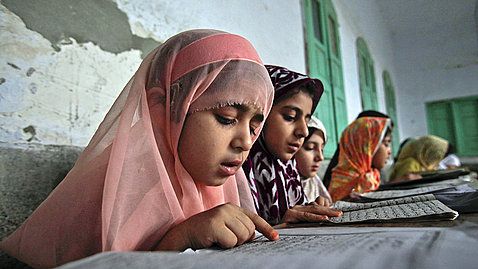 Though it is a fact that global poverty has an effect on all races, ages and genders, yet there is a truth that can’t be denied that poverty has a disproportionate impact on women. As per what the researchers have to claim, 60% of the people suffering from hunger are women and they are the ones who own less than 15% of the land that is privately owned. If you take into account the global education statistics, this also reflects the statistics which concern poverty. Did you know that 2/3rds of the 800 million people who stand illiterate are women? Do you think this is a coincidence?
We have to accept the fact that education is the ultimate way of uplifting the individuals and families from poverty and stimulating the economic growth of a country. Systematically, it is seen that girls are denied education than boys and this leads to … Continue reading >>>


 India one of the most popular young nation with around 28 million youth population being added every year. Since the population is getting high the job opportunities gone down in this competitive IT market. Entering into IT field is still in dream for some people and the job market is at peak and many organization are trying to reduce jobs for fresh graduates. The experienced people are keep on staying in respective jobs and the job security is very low for them too in current scenario.
 Identical to freedom of speech, everybody thinks there ought to be educational freedom till a instructor does one thing they do not agree with. We believe that education is a human right and we want to be sure that New York City public schools are places of learning through which all stakeholders (parents, college students, educators, non-pedagogical staff, administrators and the group) are engaged in a democratic course of to supply a free and quality education to all its college students, from Pre-faculty to College.
 WASHINGTON — Till Tuesday, the fight over Betsy DeVos’s nomination to be secretary of education revolved mostly around her support of contentious college alternative applications. These reconsiderations will require a philosophy of education that has at its core a bountiful definition of intelligence and that honors multiple kinds of data and advances the humanistic, aesthetic, and moral dimensions of an occupational as well as more traditional tutorial course of study. If that might be the mindset of each Filipino, especially the education directors and academics, the implementation could be much better that what we count on. Youngsters now start their education at a younger age – younger than in lots of OECD international locations – and plenty of continue into tertiary education.