
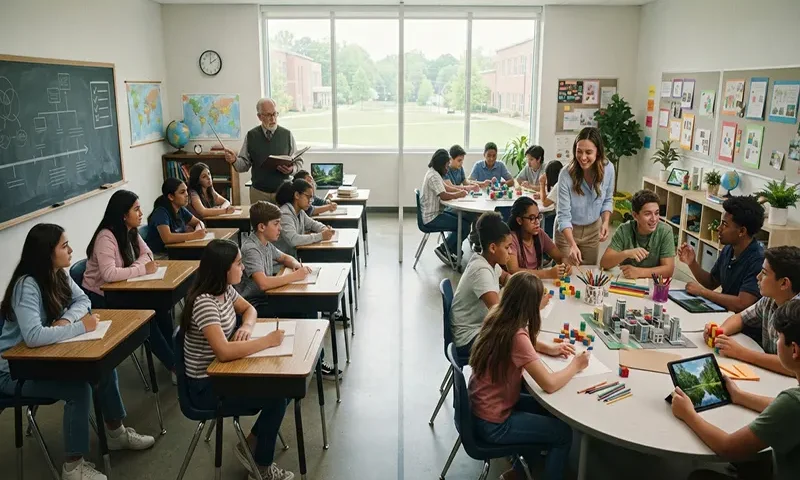
Every classroom—from a traditional grammar school in the nineteenth century to a modern, tech-integrated high school seminar—is quietly governed by a philosophy of education. Teachers, administrators, and policymakers may spend their days wrestling with lesson plans and budgets, but beneath those logistical decisions lies a fundamental philosophical question: What is the ultimate purpose of schooling, and how should knowledge be transmitted?
Throughout the history of educational thought, two dominant paradigms have stood in perpetual, dynamic tension: Essentialism and Progressivism. Understanding the key differences between these two philosophies is essential for any educator looking to define their own instructional identity and navigate modern educational debates.
Defining Educational Essentialism
Educational essentialism is rooted in a traditional, conservative view of society and knowledge. Emerging as a formal educational theory in the 1930s (though its roots stretch back centuries), essentialism asserts that there is a core body of knowledge, skills, and moral values that civilized society is obligated to transmit from one generation to the next.
In an essentialist framework, the school’s primary mission is to instill the “basics”—frequently referred to as the “Three Rs” (Reading, wRiting, and arithRmetic) alongside rigorous academic subjects like history, mathematics, science, and literature.
- The Teacher-Centered Paradigm: Essentialist classrooms are strictly teacher-centered. The instructor acts as the authoritative subject-matter expert, intellectual gatekeeper, and moral guide.
- Rigor and Discipline: Learning is viewed as hard work that requires discipline, memorization, and mastery of established canons. Innovation takes a back seat to the preservation of cultural heritage and foundational literacy.
Defining Educational Progressivism
In stark contrast to essentialism stands progressivism, a philosophical movement that gained massive traction in the late 19th and early 20th centuries, championed heavily by educational reformer John Dewey. Progressivism was born out of a desire to reform industrial-era schooling, arguing that traditional education was too rigid, passive, and disconnected from real life.
Progressivists believe that education should not merely be about memorizing the past, but about preparing students to navigate an ever-changing, democratic society. Famously, Dewey argued that “education is not preparation for life; education is life itself.”
- The Student-Centered Paradigm: In a progressive classroom, the focus shifts entirely from the teacher to the student. Children are viewed as active, curious agents of their own learning rather than empty vessels to be filled.
- Experiential and Inquiry-Driven Learning: Curriculum is flexible, often interdisciplinary, and built around problem-solving, project-based learning, and critical thinking. Students learn by doing, experimenting, and collaborating.
Head-to-Head Comparison
To truly grasp how essentialism and progressivism diverge, it helps to contrast them across core educational dimensions:
| Dimension | Educational Essentialism | Educational Progressivism |
| Primary Goal | Transmit a core body of essential academic knowledge and cultural heritage. | Teach students how to think, problem-solve, and adapt to a changing world. |
| Role of the Teacher | Authoritative instructor, subject expert, and moral disciplinarian. | Facilitator, guide, and co-explorer in the learning process. |
| Curriculum Focus | Fixed, canonical subjects (math, history, literature, hard sciences). | Flexible, student-driven, interdisciplinary, and experience-based projects. |
| Classroom Environment | Structured, orderly, quiet, and traditional lecture-based layout. | Dynamic, collaborative, interactive, and democratic group workspaces. |
| View of Assessment | Standardized testing, objective quizzes, and mastery of factual recall. | Portfolios, peer evaluations, project outcomes, and critical reflection. |
Synthesis in Modern Classrooms
While essentialism and progressivism are often presented as diametrical opposites, most contemporary classrooms do not exist at absolute philosophical extremes. Instead, modern educators frequently synthesize elements of both.
Consider the ongoing debate surrounding standardized testing versus project-based learning. Proponents of essentialism argue that rigorous, standardized metrics are necessary to ensure baseline academic equity and accountability across public schools. Conversely, progressivists contend that standardized tests stifle creativity, forcing teachers to “teach to the test” rather than fostering genuine critical thinking and problem-solving skills. Effective 21st-century educators often leverage essentialist principles to ensure students master foundational math and literacy skills, while employing progressive, inquiry-driven frameworks to teach them how to apply that knowledge to real-world challenges.
The philosophical divide between essentialism and progressivism is not merely an academic talking point for university history courses; it dictates how we design classrooms, write curricula, and evaluate student potential. Whether you lean toward the structured transmission of cultural heritage or the dynamic exploration of democratic problem-solving, understanding these foundational philosophies empowers you to articulate why you teach the way you do. Reflect on your own classroom practices today, and consider how a balanced synthesis of both traditions can better serve your students.

