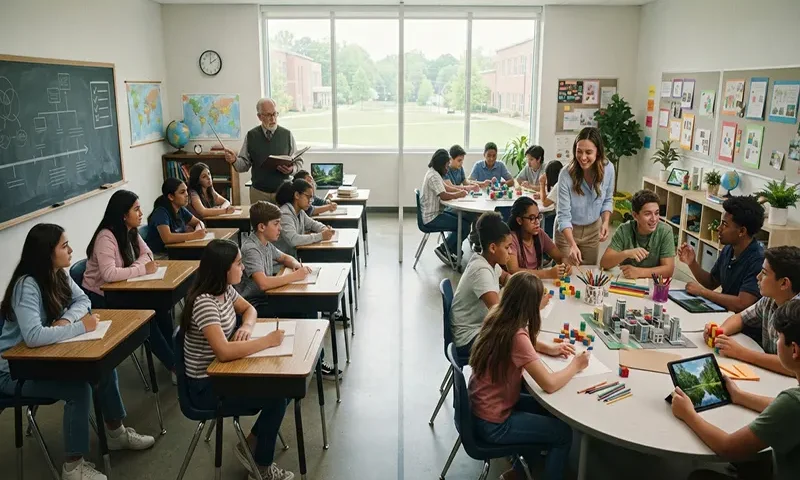

Impact of John Dewey Philosophy of Education on Experiential Learning Systems

For centuries, formal education was built on a remarkably passive premise: the student was an empty vessel, and the teacher was an authoritative pump pouring standardized knowledge into them. Classrooms demanded quiet obedience, strict memorization, and the regurgitation of abstract facts disconnected from the realities of daily life.

That industrial-era model was radically dismantled by American philosopher, psychologist, and educational reformer John Dewey. More than a century ago, Dewey argued that true learning does not happen when a student sits silently listening to a lecture. Instead, he championed a revolutionary idea: we learn by doing, and education is fundamentally rooted in human experience. Today, Dewey’s philosophical framework serves as the undisputed architectural blueprint for modern experiential learning systems across the globe.

Philosophical Foundations: Pragmatism and “Learning by Doing”

At the heart of Dewey’s philosophy is pragmatism—the belief that the value of an idea, concept, or curriculum must be judged … Continue reading >>>

Modern Examples of Pragmatism Philosophy of Education in Elementary Classrooms

Step into a traditional industrial-era elementary classroom, and you will likely see rows of silent children sitting at individual desks, staring at a chalkboard while a teacher lectures from the front of the room. Information is treated as a static commodity to be memorized, regurgitated on a Friday quiz, and promptly forgotten.

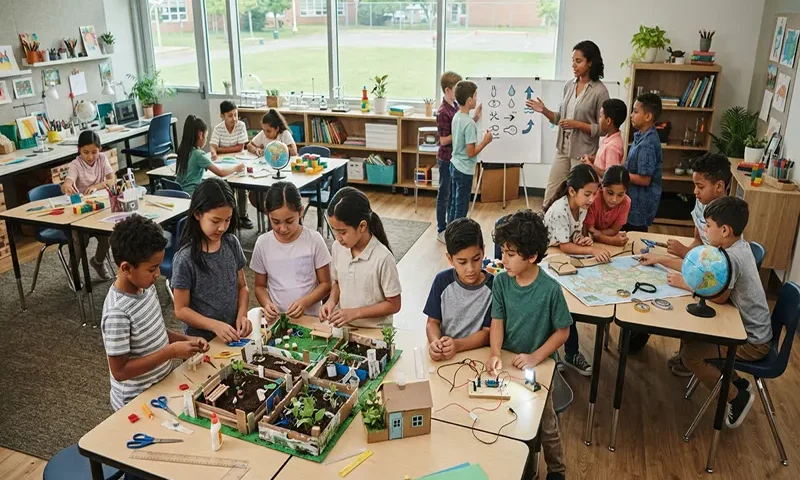
Now, step into a modern elementary classroom guided by the philosophy of pragmatism. The room hums with purposeful energy: children work in small collaborative clusters around a central table, testing hypotheses, debating how to build a stable bridge out of recycled cardboard, or measuring soil moisture for a classroom garden.

Rooted in the foundational ideas of thinkers like John Dewey, educational pragmatism posits that knowledge is not merely something to be absorbed—it is something to be actively tested, constructed, and applied through real-world experience. Far from being an outdated 20th-century theory, pragmatism is the beating heart of … Continue reading >>>

Key Differences Between Essentialism and Progressivism in Philosophy of Education

Every classroom—from a traditional grammar school in the nineteenth century to a modern, tech-integrated high school seminar—is quietly governed by a philosophy of education. Teachers, administrators, and policymakers may spend their days wrestling with lesson plans and budgets, but beneath those logistical decisions lies a fundamental philosophical question: What is the ultimate purpose of schooling, and how should knowledge be transmitted?

Throughout the history of educational thought, two dominant paradigms have stood in perpetual, dynamic tension: Essentialism and Progressivism. Understanding the key differences between these two philosophies is essential for any educator looking to define their own instructional identity and navigate modern educational debates.

Defining Educational Essentialism

Educational essentialism is rooted in a traditional, conservative view of society and knowledge. Emerging as a formal educational theory in the 1930s (though its roots stretch back centuries), essentialism asserts that there is a core body of knowledge, skills, and moral values … Continue reading >>>

How to Write a Personal Philosophy of Education Statement for Teaching Job Applications

When a school principal or hiring committee opens an educator’s job application packet, they sift through a sea of standardized resumes, credential transcripts, and boilerplate recommendation letters. Amidst the paperwork, the teaching philosophy statement is often the single most revealing document in the portfolio. It is your professional fingerprint—an opportunity to step past your resume’s bullet points and reveal who you are as an educator, why you teach, and how you translate those beliefs into everyday classroom magic.

Unfortunately, many applicants treat this statement as an afterthought, filling it with tired clichés like, “I’ve always loved working with children,” or dense, academic jargon that reads like an unreadable textbook excerpt. To stand out and secure interviews, your philosophy must be authentic, actionable, and grounded in real-world practice.

The Purpose of a Teaching Philosophy in Hiring

School administrators do not read your teaching philosophy to grade your literary prose. They are … Continue reading >>>

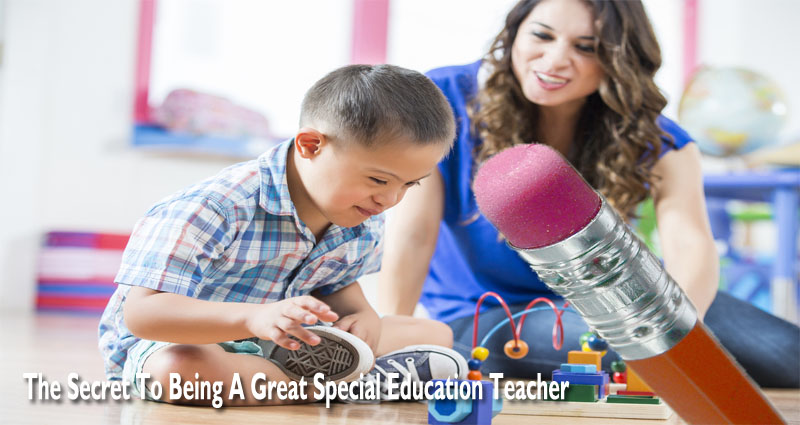
The Secret To Being A Great Special Education Teacher

Education is amongst the most rewarding professions. Special education is especially rewarding. The joy you feel when someone who’s having issues tends to make some progress is unmatched in any other field. But to be a special education teacher requires a special form of an individual. It does not merely demand special education, 1 need to also be very patient and adore individuals regardless of what their special wants. Should you will be the variety of individual who combines all these elements then a career in special education may very well be for you.

To teach special education it’s essential to be licensed. Having a license needs you to possess a minimum of a bachelor’s degree and complete an authorized education course in teaching special education. Some states require a master’s degree. Acquiring education is just not quite difficult. Several colleges present undergraduate, graduate, and doctorate level courses in the … Continue reading >>>