
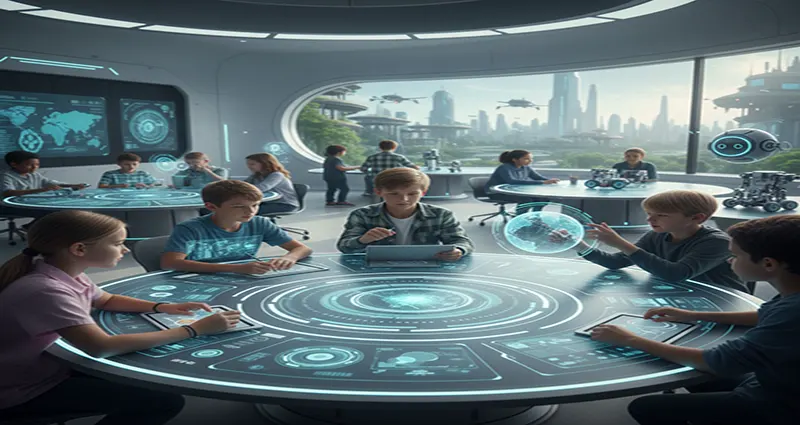
The pace of technological change is staggering. Experts predict that a significant portion of careers held by today’s students have not even been invented yet, driven by advancements in AI, biotech, and sustainability. This reality presents a core challenge to the education system: how do we prepare students for jobs we cannot define? The answer lies not in teaching specific content, which quickly becomes obsolete, but in cultivating durable skills that are transferable across any emerging field.
The most valuable assets for an unknown career landscape are not degrees of knowledge, but degrees of competence. Foremost among these is Critical Thinking and Problem-Solving. We must transition from curriculum focused on recall to models like Project-Based Learning (PBL), which forces students to analyze novel, complex problems and devise original solutions. Equally vital is Adaptability and Flexibility. Future success depends on the “learn-to-learn” mindset—the capacity to rapidly acquire new skills, embrace new tools (like AI), and thrive amid constant change. Furthermore, as machines handle routine tasks, the uniquely human skills of Creativity and Innovation—the ability to synthesize, imagine, and generate original ideas—become indispensable economic assets. Finally, given the complexity of global challenges, Emotional Intelligence (EQ) and Collaboration are essential, ensuring students can communicate, mediate, and lead diverse, interdisciplinary teams effectively.
To embed these skills, the educational environment itself must transform. We must break down traditional subject silos to promote Interdisciplinary Learning, showing students how math, art, history, and science connect to solve real-world problems. Technology should be taught not as a subject for memorization, but as a Tool, Not a Goal—students need to understand how to leverage AI and software to augment their human capabilities. Crucially, learning environments must normalize risk-taking and The Role of Failure. Students need permission to experiment without the fear of penalization, viewing mistakes as essential data points in the creative and problem-solving process.
In the face of an undefined future, the best preparation is the cultivation of a resilient, curious, and perpetually learning mind. Educators and policymakers must prioritize curriculum reform that shifts focus from rote memorization and standardized knowledge to the mastery of enduring processes and skill development. By equipping students with a robust toolkit of critical thinking, adaptability, and collaboration, we give them the foundational capabilities needed to define the careers that do not exist yet—and to thrive in them.

