
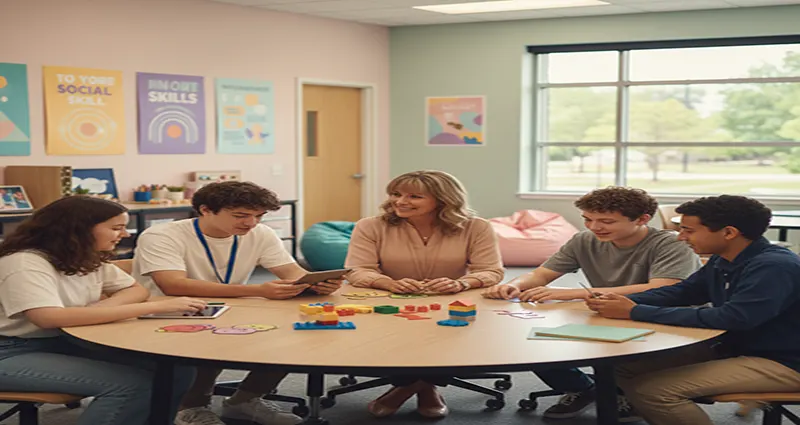
The high school environment is a complex and often overwhelming social maze defined by shifting peer dynamics, subtle humor, and unspoken rules. For students on the autism spectrum, navigating this landscape presents formidable and unique challenges. Targeted social skills instruction is not merely a beneficial supplement; it is a critical necessity for ensuring their academic success, bolstering their emotional well-being, and fostering the independence required for adult life.
Understanding the root causes of these difficulties is the first step. Autistic individuals often face hurdles in interpreting non-verbal cues (like facial expressions and body language), struggle with abstract language such as sarcasm or idioms, and find it difficult to execute the complex cognitive task of perspective-taking. While these differences are neurological—not a reflection of a lack of desire for connection—they intensify during the high school years when peer communication becomes more nuanced and social demands skyrocket. Therefore, skills must be taught deliberately and explicitly.
Effective instruction relies on evidence-based, structured strategies. We must prioritize Explicit and Direct Teaching, breaking down abstract social concepts (like introducing a topic or politely ending a conversation) into concrete, sequential steps. Visual aids, Social Stories, and clear behavioral scripts can be highly effective tools. Practice is non-negotiable: utilize Role-Playing and Practice sessions in a supportive setting, allowing students to rehearse skills and receive immediate, constructive feedback. Furthermore, Video Modeling, where students observe appropriate social interactions demonstrated by peers or adults, leverages visual strengths and provides a clear template for behavior. Finally, implementing Social Skills Groups focused on specific, measurable objectives—like conflict resolution or understanding conversational flow—allows for focused practice and generalization of skills. Pairing students with reliable Peer Mentors can also offer natural, supervised modeling.
Creating a successful environment requires Collaboration across the entire school team—special education teachers, general education staff, and counselors must work together to reinforce target skills consistently in every setting. Schools should advocate for Structured Opportunities, such as supported participation in low-pressure clubs or structured lunch periods, to provide real-world practice. Always use Positive Reinforcement, celebrating even small social successes with specific praise (“I noticed you waited for your friend to finish talking before you responded. That’s great listening!”). Above all, educators must Respect Individual Differences, recognizing that success looks different for every student and fostering self-advocacy skills is the ultimate goal.
Targeted social skills instruction in high school is about much more than fitting in; it’s about empowering autistic students with the tools they need to navigate their world confidently, build meaningful connections, and ultimately achieve a profound sense of independence and belonging.

