Top Employee Monitoring Tools That Actually Help Remote Teams Get Work Done

Remote work gave everyone flexibility. It also handed managers a new pile of problems. You try to keep projects moving, but you cannot see what is really happening day to day.

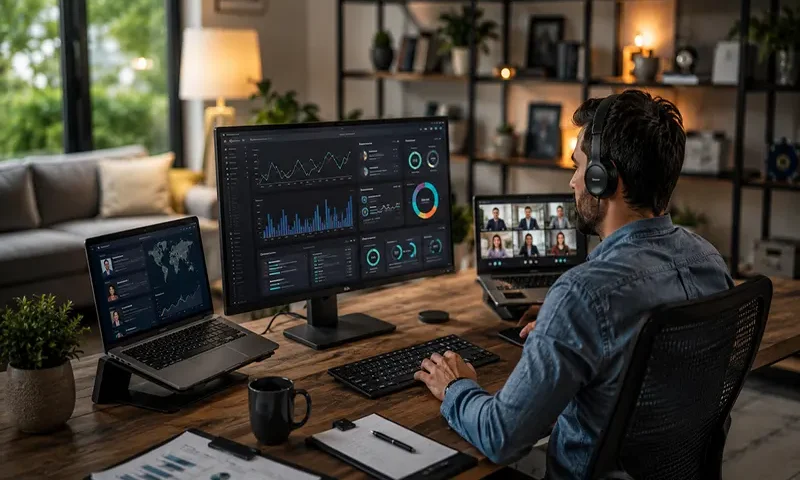
Many teams now run software that tracks time, activity, and output. The good ones do it without turning the office into surveillance theater.

A lot of companies start with Controlio. The Controlio Tool shows clear hours without the heavy-handed feel that makes people tense.

I watched small teams cut wasted time by 20–30% once they began measuring what actually happened during the day. The difference came from picking something that fit instead of chasing every feature on the market.

Why Employee Monitoring Matters More in 2026

Hybrid work stayed messy. Some people crushed it from home. Others needed more guardrails to stay on track. Monitoring tools stepped in to bridge that gap between trust and real accountability.

They … Continue reading >>>

How to Write a Personal Philosophy of Education Statement for Teaching Job Applications

When a school principal or hiring committee opens an educator’s job application packet, they sift through a sea of standardized resumes, credential transcripts, and boilerplate recommendation letters. Amidst the paperwork, the teaching philosophy statement is often the single most revealing document in the portfolio. It is your professional fingerprint—an opportunity to step past your resume’s bullet points and reveal who you are as an educator, why you teach, and how you translate those beliefs into everyday classroom magic.

Unfortunately, many applicants treat this statement as an afterthought, filling it with tired clichés like, “I’ve always loved working with children,” or dense, academic jargon that reads like an unreadable textbook excerpt. To stand out and secure interviews, your philosophy must be authentic, actionable, and grounded in real-world practice.

The Purpose of a Teaching Philosophy in Hiring

School administrators do not read your teaching philosophy to grade your literary prose. They are … Continue reading >>>

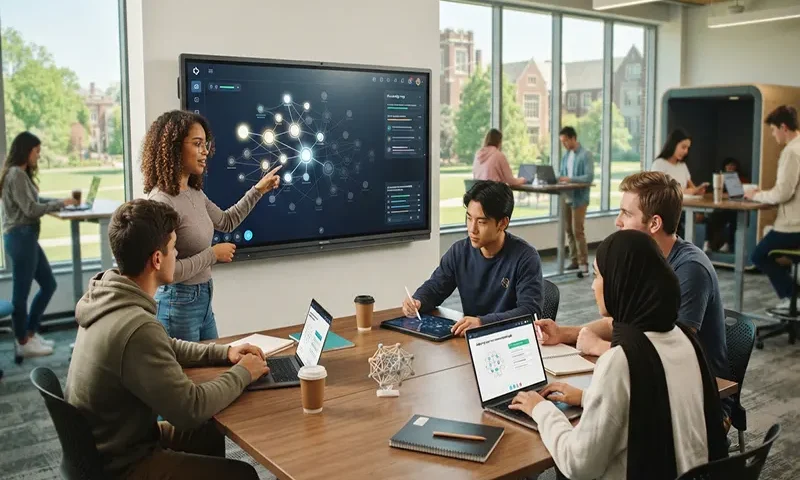
Personalized AI Adaptive Learning Software for Higher Education

For centuries, the architecture of higher education has remained remarkably consistent: a professor stands before an amphitheater of hundreds of students, delivering a standardized lecture at a single, unyielding pace. In this mass-lecture model, students are treated as a collective uniform entity rather than individuals with distinct cognitive profiles, prior knowledge levels, and learning speeds. Those who grasp complex concepts instantly grow restless, while those struggling with foundational prerequisites quietly fall behind. Today, this industrial-era framework is being dismantled by artificial intelligence. Personalized AI adaptive learning software is sweeping across university campuses, transforming higher education from a rigid sorting mechanism into a dynamic, student-centric ecosystem.

The Mechanics of Adaptive EdTech

At its core, personalized AI adaptive learning software utilizes machine learning algorithms and real-time diagnostic analytics to continuously model a student’s cognitive state. Unlike static digital textbooks or traditional learning management systems (LMS) that present information in a linear sequence, … Continue reading >>>