

Impact of John Dewey Philosophy of Education on Experiential Learning Systems
For centuries, formal education was built on a remarkably passive premise: the student was an empty vessel, and the teacher was an authoritative pump pouring standardized knowledge into them. Classrooms demanded quiet obedience, strict memorization, and the regurgitation of abstract facts disconnected from the realities of daily life.
That industrial-era model was radically dismantled by American philosopher, psychologist, and educational reformer John Dewey. More than a century ago, Dewey argued that true learning does not happen when a student sits silently listening to a lecture. Instead, he championed a revolutionary idea: we learn by doing, and education is fundamentally rooted in human experience. Today, Dewey’s philosophical framework serves as the undisputed architectural blueprint for modern experiential learning systems across the globe.
Philosophical Foundations: Pragmatism and “Learning by Doing”
At the heart of Dewey’s philosophy is pragmatism—the belief that the value of an idea, concept, or curriculum must be judged … Continue reading >>>


Top Interdisciplinary Skills Required for Sustainable Tech Careers
For years, corporate sustainability was dominated by public relations campaigns, vague net-zero pledges, and high-level corporate social responsibility reports. Today, that era of greenwashing is rapidly giving way to rigorous technical execution. Driven by tightening international environmental regulations, mounting climate pressures, and unprecedented technological breakthroughs, the global green transition has become one of the largest economic transformations in modern history.
However, solving complex planetary crises—such as decarbonizing energy grids, optimizing circular supply chains, and scaling carbon capture—cannot be achieved by traditional environmental scientists working in isolation, nor by tech engineers who lack ecological literacy. The future belongs to the climate-tech hybrid professional: individuals who seamlessly merge technical prowess with deep systems thinking, environmental science, and policy awareness.
The Evolution of the Green Tech Job Market
The modern sustainable technology sector is expanding at an extraordinary pace, but the nature of its hiring demand has shifted dramatically. Employers are no … Continue reading >>>

Leadership Development Training and the Path to Effective Organizational Growth
Common wisdom often suggests that identifying potential leaders is a matter of spotting individuals who are naturally assertive, highly visible, or particularly talented at their current technical tasks. Organizations frequently operate on the assumption that these high-performing contributors will naturally evolve into effective managers if they are simply given the title and a bit of time to adjust to the new workload. However, the reality is far more nuanced. The skills that drive success as an individual contributor—such as technical mastery or personal output—often differ significantly from the skills required to foster high-performing teams, manage interpersonal dynamics, and navigate complex organizational changes.
Why traditional approaches to management training often fall short
Many organizations treat the transition from a specialized role to a leadership position as a mechanical process rather than a developmental one. They assume that providing a handbook, a brief overview of company policies, or a series of generic … Continue reading >>>
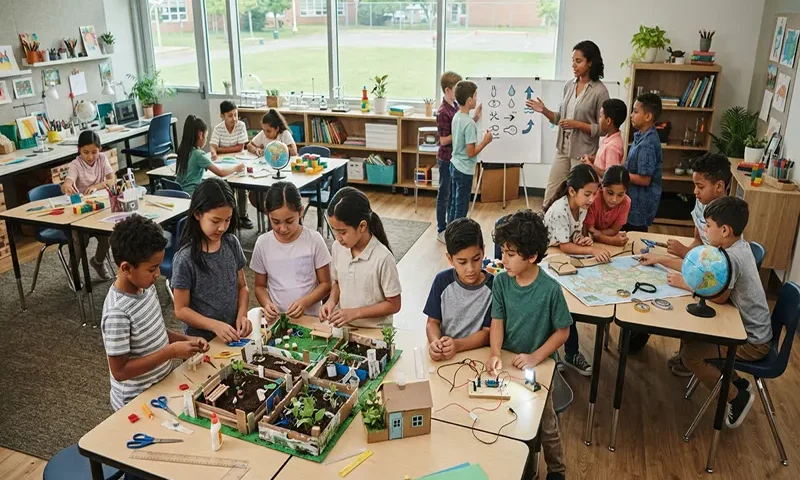
Modern Examples of Pragmatism Philosophy of Education in Elementary Classrooms
Step into a traditional industrial-era elementary classroom, and you will likely see rows of silent children sitting at individual desks, staring at a chalkboard while a teacher lectures from the front of the room. Information is treated as a static commodity to be memorized, regurgitated on a Friday quiz, and promptly forgotten.
Now, step into a modern elementary classroom guided by the philosophy of pragmatism. The room hums with purposeful energy: children work in small collaborative clusters around a central table, testing hypotheses, debating how to build a stable bridge out of recycled cardboard, or measuring soil moisture for a classroom garden.
Rooted in the foundational ideas of thinkers like John Dewey, educational pragmatism posits that knowledge is not merely something to be absorbed—it is something to be actively tested, constructed, and applied through real-world experience. Far from being an outdated 20th-century theory, pragmatism is the beating heart of … Continue reading >>>

Benefits of Personalized AI Language Learning for Adults
For decades, adults looking to learn a new language faced a frustrating dilemma. Traditional options usually meant enrolling in rigid evening classes, buying one-size-fits-all textbooks designed for academic classrooms, or sitting through embarrassing group-speaking drills where the fear of making mistakes outweighed the desire to learn. For busy professionals and lifelong learners juggling career, family, and packed schedules, these traditional methods often ended in burnout and abandoned goals.
Today, artificial intelligence is rewriting the rules of second-language acquisition. By delivering hyper-customized, on-demand, and adaptive learning environments, personalized AI language software has transformed how adults achieve fluency.
The Adult Learner’s Unique Dilemma
Adults approach learning fundamentally differently than children or traditional students. They possess high cognitive capability and clear motivations—such as a corporate relocation, international business negotiations, or travel readiness—but they are severely constrained by time and psychological barriers.
- Time Scarcity: Adults cannot commit to hours of daily homework or rigid